
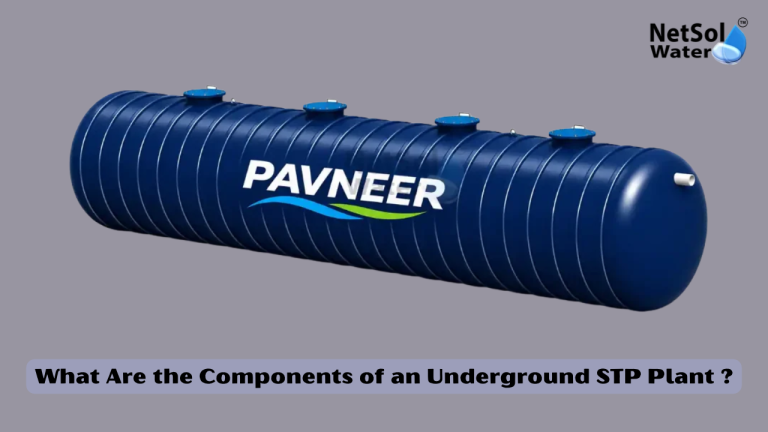
A subterranean STP facility consists of an interconnected array of units, including the screen and grit chamber, the equalisation tank, the aerating device, the separation process, the disinfection process, sludge treatment, control facilities, ventilation and entry facilities. All the units perform a specific function, and any problem with one unit affects all other units. Knowledge about the function performed by a certain unit, specifications required for that unit, and the early signs of failure of the unit will help compare quotations and operate the facility efficiently.
Why Does Knowing the Components Matter Before You Buy?
Most quotes give items their names: “blower, 2 nos,” “dosing pump, 1 no,” “level sensor, 4 nos.” Such a list provides no information on whether the items will be suitable to the site conditions, reachable for servicing, or any consequences of failure of one of the parts. Understanding each part’s function allows an inquirer to ask more informed questions and notice details such as the need for a standby pump or the lack of a removal option for sludge pumps.
The parts are also connected in a chain. Poor screening strains the pumps. Insufficient size of the equalization tank stresses the biological treatment unit. Blower failure affects both aeration and separation stages. The following list of parts is presented in the order they appear in the plant.
What Is the Screen and Grit Chamber?
Screening and grit chamber is the initial stage of the treatment process. A coarse screen, usually a basket screen or bar screen, traps rags, plastics, and sanitary waste. Grit chamber allows sand and other heavier material to settle before reaching the pumps and tanks.
Requirements: a removable screen basket with lifting handle visible, an opening for the screen that fits the nature of the sewage, and grit channel for removal of the grit. The chamber must be covered and ventilated because of the rapid decomposition of screenings.
Initial symptoms: an increase in level prior to the screen, rags around the pump suction point, increasing grit in the equalisation tank, and foul smell from the screen section.
What Does the Equalisation Tank Do?
Equalisation tank takes in the flow peaks from the building and releases them with a constant rate. It buffers the biological process from shock loading and ensures that the pumps operate with a constant cycle.
Items to include: volume that is appropriate to the peak flow and retention time, mixing or aeration to ensure suspension of the solids, and level monitoring equipment with high level alarm.
Preceding indicators: rise in the level at a daily recurring interval, a crust or floatation layer at the surface, and septic odour when the tank is opened.
As an example, a plant processing 50 cubic metres per day at 6 hours retention time requires approximately 12.5 cubic metres equalisation volume (50 × 6 ÷ 24). The actual volume will depend on the measured flow cycle of the building.
What Are the Blowers, Diffusers, and Aeration Grid?
The blowers provide air to sustain the biology in the system. The air goes through diffusers or an aerating grid located on the bottom of the aeration tank. In this tank, the air creates tiny bubbles to dissolve oxygen in the water.
To be specified: blowers suitable for air volume and pressure, required by the depth of the aeration tank, an intake filter, a spare blower in case of crucial process, and fine bubble diffusers that can be cleaned.
Signals of early trouble: unusual noise from the blower, heat around the casing of the blower, a clogged intake filter, uneven bubbling at the tank, and dissolved oxygen decrease at the end of the tank.
What Is the Aeration Tank and What Happens in It?
The aeration tank is where microorganisms consume the organic matter. It is the biological heart of the plant, and its condition reflects how well the other parts are working.
What to specify: a tank volume suited to the design load, with access for inspection and a sampling point for mixed liquor.
Early warning signs: a foam layer that does not break down, a change in the colour of the mixed liquor, and a settling test that gives a loose or slow sludge.
What Separates the Solids From the Clean Water?
In a traditional treatment plant, a clarifier provides for settling of the biomass in order for the clarified water to be discharged from the top of the clarifier. In the case of a membrane bioreactor, the membranes separate and retain the solid material in the process stream.
Separation is the step where an anomaly is first detected in the outlet.
Specs for clarifier include surface area corresponding to the flow rate, sludge removal mechanism, and a weir that distributes the discharge uniformly.
Membrane specs include a liftable module, air scouring, and a cleaning system. Lifting membrane modules underground requires a plan.
Early indicators of a problem include solids carryover in the outlet stream, sludge blanket accumulation in the clarifier, and increasing pressure in the membranes.
What Disinfects the Treated Water?
Disinfection uses chlorine or ultraviolet light to reduce pathogens before the water leaves the plant. Chlorine needs a dosing pump, a storage tank, and a contact chamber that gives the dose enough time to act. UV needs a lamp unit that is cleaned and replaced on schedule.
What to specify: a dosing system matched to the flow, with a residual check at the outlet, or a UV unit sized for the peak flow with a lamp-life alarm.
Early warning signs: a residual that falls to zero or rises well above normal, a dosing pump that has lost prime, and a UV lamp that dims or fails its alarm.
What Handles the Sludge?
Excess biomass is wasted from the process into a sludge holding tank. The holding tank and its pump keep the sludge stored until it is removed or dewatered.
What to specify: a holding tank volume matched to the sludge production and the removal interval, a sludge pump with a reachable suction, and a route for the removal vehicle or the dewatering unit.
Early warning signs: a holding tank that fills faster than expected, a sludge pump that runs too long or trips, and odour from the sludge area.
What Controls and Monitors the Plant?
The control panel switches the pumps and blowers on and off, receives data from the level sensors, and provides an alarm.
Parameters for the specification: an alarm-indicating control panel, level sensors with a backup float, self-cleaning and calibrating dissolved oxygen probes, and a remote alarm in case the plant is unmanned.
Possible early warnings: repeated tripping of the alarm, drifting from the reference point by the probe, and resetting of the control panel in the event of a power outage.
What Ventilates the Tanks and Protects Access?
Underground tanks need air movement to prevent gas build-up, and they need access covers that let staff and equipment in and out safely.
What to specify: a fan or passive vent path designed for the highest-odour phase, a vent outlet placed away from occupied spaces, and access covers rated for the expected load, with a secure locking arrangement.
Early warning signs: a smell at the cover, condensation or corrosion inside the access structure, and a fan that is not running when it should.
How Should You Use This Component List When Comparing Quotes?
A) Check that every process stage in this list is present, or that its absence is explained.
B) Look for a standby on the blowers, pumps, and dosing equipment if the plant is critical.
C) Confirm the removal route for every component that will need lifting.
D) Ask what the alarms are, where they go, and who receives them.
E) Confirm the material and rating of the tanks, including any FRP or concrete choice, and the anchorage where needed.
Conclusion
An Underground STP Plant is a chain of components, and each one has a role the others depend on. Specify each part for the site, check that it can be reached for service, and learn the early signs of failure so small faults are caught before they spread. A quotation that answers these points for every component is one you can compare with confidence.
Commercial RO Plant specifies and supplies each component of an underground STP plant against the site survey, with removal routes and alarm arrangements confirmed in the design. Request a component-by-component quotation from Commercial RO Plant or message us on WhatsApp at +91 9650608473.
Suggested internal link: the underground STP service page, and the equipment or spares page.
Sources:
- CPCB, for the framework on sewage treatment plant design and monitoring (verify the current document before linking): https://cpcb.nic.in
FAQ
Question: What are the most important components of an underground STP plant?
Answer: The blowers and aeration system, the separation stage (clarifier or membranes), the equalisation tank, and the controls matter most. A failure in any of them affects treated water quality quickly, so each needs a standby or a clear recovery plan.
Question: Why does the screen matter so much in an underground plant?
Answer: A failed screen lets rags and grit reach the pumps and tanks, causing blockages and wear. Underground, these problems are harder to reach, so keeping the screen clean and the basket removable matters more.
Question: Do I need a standby blower?
Answer: If the plant is critical, such as a hospital or a hotel, a standby blower is strongly advisable. For a smaller plant, the decision depends on the risk and the service response time. Confirm the choice with the design engineer.
Question: Which is better, a clarifier or an MBR?
Answer: Neither is better in general. A clarifier is simpler to inspect. An MBR gives higher effluent quality and a smaller footprint, but its membranes need cleaning and replacement, which is harder underground. The choice depends on the site and the reuse target.
Question: How can I tell if the disinfection is working?
Answer: Measure the chlorine residual at the outlet, not only at the dosing point, and check it at more than one time of day. For UV, check the lamp-life and the alarm records. Consistent residual readings are the clearest evidence.
Question: Should I ask for component warranties?
Answer: Yes. Ask each supplier for the warranty period and what it covers for each major item, including blowers, pumps, membranes, and the control panel. Check the conditions attached, such as the running hours or the water quality the warranty assumes.