
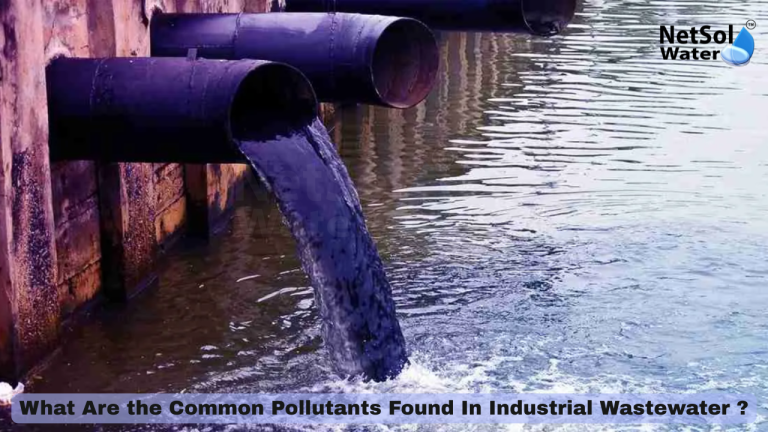
Industrial wastewater varies so much between sectors that a single number rarely tells the whole story, but a few figures capture just how extreme that variation gets. Distillery effluent, for instance, can carry a BOD load around 90,000 mg/L, according to research compiled by Science Direct’s overview of industrial pollution, an organic load thousands of times higher than typical treated municipal sewage. That single statistic says a lot about why “industrial wastewater treatment” can’t be approached as one generic solution, since the pollutant load a distillery generates has almost nothing in common with what an electroplating unit or a pharmaceutical facility produces. In this blog we will discuss about what are the common pollutants found in industrial wastewater.
This blog breaks down the pollutant categories that actually show up across industrial wastewater, what makes each one difficult to manage, and why knowing your facility’s specific pollutant profile is the real starting point for any treatment plan, not something to figure out after equipment has already been bought and installed.
Why Do Organic Pollutants Dominate Most Wastewater Test Reports?
The most fundamental way industrial wastewater gets characterised is through its organic load, measured using two related but distinct parameters found on virtually every effluent test report a facility will ever receive.
BOD and Biological Load
BOD measures how much oxygen microorganisms need to biologically break down organic matter in wastewater. Industries producing food, beverages, and biological products generate wastewater with particularly high BOD, since sugars, proteins, and fats are readily consumed by bacteria. A BOD5 reading above 100 mg/L already signals high-strength organic pollution, and food processing or brewing effluent routinely runs well past that figure before treatment even begins.
COD and the Full Picture
It measures the total oxygen required to chemically oxidise all organic and inorganic matter in a sample, capturing both biodegradable and non-biodegradable material at once. COD readings are always equal to or higher than BOD for the same water sample, and a COD above 500 mg/L is typically associated with heavily polluted industrial sources requiring intensive treatment rather than a basic single-stage process.
What a Wide COD-BOD Gap Actually Reveals
Pharmaceutical and petrochemical effluent often shows high COD alongside comparatively low BOD, a signature that points toward non-biodegradable compounds resisting biological breakdown. When this gap is wide, it signals that a meaningful share of the pollutant load won’t respond to conventional biological treatment at all, and advanced oxidation or physical-chemical stages need to be part of the design from the start rather than added later once a plant is already underperforming.
Why This Ratio Matters More Than Either Number Alone
Engineers often look at the relationship between BOD and COD together rather than either figure in isolation, since this ratio, sometimes called a biodegradability index, tells a treatment designer how much of the pollutant load can realistically be handled by bacteria versus how much needs chemical intervention. A facility with a low BOD-to-COD ratio is effectively telling its treatment provider that a standard aeration tank alone won’t get the job done, no matter how well it’s operated.
Does Suspended and Physical Waste Cause Bigger Problems Than People Assume?
Beyond dissolved organic pollutants, industrial wastewater carries physical material that needs removing before biological or chemical treatment can work effectively at all, and skipping this step tends to cause cascading problems further downstream.
TSS Clouds and Clogs Systems
Total suspended solids refers to particulate matter, silt, fibres, process residue, that stays suspended rather than dissolved in wastewater. High TSS clouds water, blocks light penetration in receiving water bodies, and physically clogs downstream treatment equipment if it isn’t screened out early in the process, a problem that only compounds the longer it goes unaddressed.
Oil and Grease Block Downstream Treatment
Petrochemical, food processing, and metalworking industries commonly discharge oil and grease, which floats on the water surface, blocks oxygen transfer, and interferes with both biological treatment and membrane filtration if it reaches those stages untreated. Even a relatively thin oil layer on an aeration tank’s surface can meaningfully cut oxygen transfer efficiency, starving the biological process of exactly what it needs to function.
Why Tannery Sludge Needs Separate Handling
Certain processes generate heavy sludges directly rather than dissolved pollutants, tannery operations being a well-documented example, where sludge from the tanning process carries contamination from pigments, dyes, retaining agents, and heavy metal complexes requiring dedicated handling separate from the liquid effluent stream entirely.
The Downstream Cost of Ignoring Physical Solids
Facilities that underinvest in screening and primary settling often see the consequences show up as expensive equipment problems rather than obvious water quality failures, worn pump impellers, clogged aerators, and membranes fouling far faster than their rated lifespan would suggest, all traceable back to physical solids that should have been removed at the very first stage.
Why Are Heavy Metals Considered the Most Persistent Threat in Industrial Wastewater?
Heavy metals represent one of the most serious pollutant categories in industrial wastewater, precisely because they don’t break down the way organic pollutants do over time, no matter how long they sit in a treatment system.
Non-Biogenic Metals and Persistence
Non-biogenic heavy metals such as mercury, cadmium, arsenic, chromium, thallium, and lead are highly hazardous and persistent in wastewater treatment systems specifically because of their non-biodegradable, recalcitrant nature. Unlike BOD, which bacteria can genuinely consume, heavy metals simply accumulate unless they’re physically or chemically removed from the water stream through dedicated precipitation, ion exchange, or membrane-based recovery.
Where These Metals Actually Come From
1) Electroplating and metal finishing operations, where chromium, nickel, zinc, and copper are used directly in plating processes
2) Tanneries, where chromium is used specifically as a tanning agent, alongside arsenic, cadmium, cobalt, and iron found in tannery sludge
3) Battery manufacturing and electronics production, both associated with lead, cadmium, and mercury contamination in process wastewater
4) General manufacturing, where cutting fluids and surface treatment processes introduce trace heavy metals into wash water that’s easy to overlook
Metal Toxicity Doesn’t Stop at the Treatment Plant
Heavy metals in wastewater can inhibit the very microorganisms used in biological treatment, which is exactly why standard BOD testing procedures specifically require water free of toxic metals like copper, mercury, and cadmium, since their presence can suppress the microbial activity the test itself depends on to function correctly, let alone what it does to a full-scale biological treatment process running continuously.
Why Recovery Matters as Much as Removal
For a lot of industries dealing with heavy metals, particularly electroplating, recovering the metal rather than simply removing it can turn a disposal cost into a genuine resource recovery opportunity. Properly designed precipitation or ion exchange systems can concentrate metals like chromium and nickel into a form that’s economically worth reclaiming, rather than treating every trace of metal purely as waste to be disposed of.
Should Nutrient Pollution Be Taken as Seriously as Heavy Metals and Organic Load?
Nutrient pollution doesn’t get the same attention as heavy metals or organic load, but it drives one of the most visible environmental consequences of poorly treated wastewater, and it’s often the pollutant category regulators react to fastest once it becomes visible in a receiving water body.
Where Nitrogen and Phosphorus Originate
Ammonia, nitrites, and nitrates commonly appear in industrial wastewater from tanneries, food processing, and any operation using nitrogen-containing chemicals or generating protein-rich waste. Phosphates typically originate from cleaning agents and specific chemical formulations used across a wide range of industries, often in concentrations facility owners don’t realise are present until testing reveals them.
Why Nutrients Cause Damage Downstream
Nutrient pollution, particularly excess nitrogen, is the leading cause of eutrophication in many freshwater sources, a process where nutrient overload triggers rapid algal bloom growth. As those blooms die and decompose, the process consumes dissolved oxygen in the water body, creating conditions that can suffocate fish and other aquatic life well beyond the immediate discharge point, sometimes kilometres downstream of the original source.
Why This Pollutant Is Easy to Overlook Internally
Because nitrogen and phosphorus don’t carry the same visible toxicity concern as heavy metals, facilities sometimes deprioritise nutrient removal in their treatment design, only to find later that nutrient limits are exactly what an inspection flags, since eutrophication downstream is often the most visually obvious sign of a treatment gap to outside observers and regulators alike.
What Role Do Inorganic Chemical Pollutants Play in Treatment Difficulty?
A broad category of dissolved inorganic substances rounds out the typical industrial wastewater profile, and while individually less dramatic than heavy metals, these pollutants still affect both water chemistry and downstream treatability in ways that are easy to underestimate.
Chlorides, Sulphides, and Sulphates
These inorganic compounds affect water chemistry and treatment effectiveness directly. Sulphides in particular are common in tannery and certain chemical processing wastewater, and if ferrous ions or sulphides aren’t completely removed during treatment, the effluent’s COD reading can still exceed discharge standards even after biological treatment, since these compounds carry reducing properties that register on a standard COD test independent of organic content.
pH Imbalance Affects Every Later Stage
Industrial processes frequently shift wastewater pH well outside neutral, either acidic from chemical processing or alkaline from cleaning operations, and this needs correction before biological treatment can function properly, since the microorganisms responsible for breaking down organic pollutants operate within a fairly narrow pH tolerance and simply underperform, or die off entirely, outside that range.
Why Salinity Deserves Its Own Mention
High chloride content, common in textile dyeing and certain food processing effluent, can inhibit biological treatment even when organic pollutant levels look otherwise manageable, since elevated salinity places osmotic stress on the microorganisms doing the actual treatment work, an effect that’s easy to miss if a facility’s testing regime only checks the headline BOD and COD figures.
Are Emerging Contaminants Becoming a Bigger Problem Than Traditional Pollutants?
A newer, increasingly scrutinised category has emerged alongside the traditional pollutant list, one that conventional treatment wasn’t originally designed to handle at all.
Synthetic Dyes and Phenolic Compounds
Textile and dye manufacturing generates wastewater carrying synthetic dyes and phenolic compounds that resist natural degradation, requiring advanced oxidation processes specifically because standard biological treatment struggles to break these molecules down, no matter how long the retention time or how healthy the biomass.
Pharmaceutical and Petrochemical Residues
Pharmaceutical manufacturing and petrochemical processing release hydrocarbons, aromatics, and synthetic organic compounds that similarly resist conventional treatment, part of a growing group researchers now refer to as contaminants of emerging concern, alongside personal care products, pesticides, and industrial byproducts increasingly detected in wastewater streams worldwide.
Why This Category Keeps Growing in Importance
These persistent compounds are increasingly recognised as a major threat to available water sources precisely because conventional treatment infrastructure, designed decades ago around BOD, COD, and TSS removal, wasn’t built with these molecules in mind, pushing more industries toward advanced oxidation and electrochemical treatment as a genuine necessity rather than an optional upgrade reserved for the largest facilities.
How Much Does the Pollutant Profile Actually Change From One Industry to Another?
It’s worth being clear that no two industries produce identical wastewater, and understanding your specific sector’s typical pollutant profile matters enormously for designing treatment that actually works rather than treatment that merely looks adequate on paper.
A) Food and beverage processing generates wastewater rich in proteins, fats, and carbohydrates, driving very high BOD
B) Textile and dyeing operations produce effluent carrying synthetic dyes, high COD, and elevated salinity
C) Electroplating and metal finishing discharge heavy metal-laden wastewater requiring dedicated recovery stages
D) Pharmaceutical and petrochemical industries generate high-COD, low-biodegradability effluent carrying persistent organic compounds
E) Tanneries produce a particularly complex mix of chromium, sulphides, high organic load, and heavy sludge generation simultaneously
Who We Are and Why Choose Commercial RO Plant
Understanding a wastewater stream’s actual pollutant profile is the foundation everything else depends on, and it’s exactly where Commercial RO Plant starts every project. Rather than applying a generic treatment template across every client, our engineering team begins with detailed effluent characterisation, testing for BOD, COD, TSS, heavy metals, and industry-specific contaminants relevant to your particular process, before recommending a single piece of equipment.
This matters because the pollutants outlined throughout this article don’t respond to the same treatment approach. A textile unit dealing with dye-heavy, high-COD wastewater needs a fundamentally different design than an electroplating facility managing heavy metal recovery, and treating both the same way is exactly how so many effluent treatment plants underperform against their design specifications. Our team designs treatment systems around your actual effluent chemistry, sizes each stage against real production volumes rather than rough estimates, and builds in the compliance margin needed to handle tightening discharge norms rather than just scraping past today’s minimum requirement. We also provide ongoing AMC support, effluent quality verification, and documentation assistance for Consent to Establish and Consent to Operate, since a treatment system is only as reliable as the maintenance and monitoring behind it.
Conclusion
Industrial wastewater carries a genuinely diverse range of pollutants, organic load measured through BOD and COD, suspended solids and oil, persistent heavy metals, nutrient compounds driving eutrophication, inorganic chemical residues, and an expanding category of persistent organic contaminants that conventional treatment wasn’t originally built to handle. Each pollutant category demands a different treatment response, and understanding which ones your specific process actually generates is the first, non-negotiable step before any treatment system can be designed correctly.
If your facility needs a clearer picture of its actual effluent characteristics, or an existing treatment system reviewed against what your process is genuinely producing, Commercial RO Plant’s team can carry out proper effluent characterisation and recommend a treatment approach matched to your real pollutant profile rather than a generic industry assumption.
FAQs
Question: What is the difference between BOD and COD in industrial wastewater?
Answer: BOD measures the oxygen microorganisms need to biologically break down organic matter, while COD measures the total oxygen required to chemically oxidise both organic and inorganic matter present. COD is always equal to or higher than BOD for the same sample, and a large gap between the two usually signals non-biodegradable compounds that need advanced treatment beyond standard biological processes.
Question: Why are heavy metals considered more dangerous than organic pollutants in wastewater?
Answer: Heavy metals like mercury, cadmium, chromium, and lead are non-biodegradable and persistent, meaning they don’t break down the way organic pollutants do under biological treatment. They can also inhibit the microorganisms used in biological treatment stages and accumulate in sediment and aquatic life once discharged, making them a longer-lasting environmental hazard than most organic pollutants.
Question: Which industries typically produce the highest BOD wastewater?
Answer: Food processing, brewing, and distillery operations generally produce the highest BOD wastewater, since their effluent carries readily biodegradable organic material like sugars and proteins. Distillery wastewater in particular can reach BOD levels far beyond what most other industries generate, given the concentrated organic content left over from fermentation.
Question: What causes nutrient pollution in industrial wastewater, and why does it matter?
Answer: Nutrient pollution comes primarily from nitrogen compounds like ammonia and nitrates, and phosphate compounds from cleaning agents and certain manufacturing processes. Once discharged, excess nutrients trigger eutrophication in receiving water bodies, causing algal blooms that deplete dissolved oxygen as they decompose, which can seriously harm aquatic ecosystems well beyond the immediate discharge site.
Question: Are emerging contaminants like pharmaceutical residues actually a serious concern?
Answer: Yes, increasingly so. These persistent organic compounds, including pharmaceutical residues, synthetic dyes, and petrochemical byproducts, resist conventional biological treatment and are being detected in wastewater streams with growing frequency. Many facilities dealing with these compounds now need advanced oxidation processes specifically to address contaminants that standard treatment infrastructure wasn’t originally designed to remove.
Question: How can a business find out exactly what pollutants are in its wastewater?
Answer: Proper effluent characterisation through laboratory testing is the only reliable way, checking BOD, COD, TSS, pH, heavy metal content, and any industry-specific contaminants relevant to the facility’s actual process. This testing should be done directly on the facility’s real wastewater stream rather than assumed from generic industry averages, since even similar facilities can show meaningfully different pollutant profiles depending on their specific process and raw materials.