
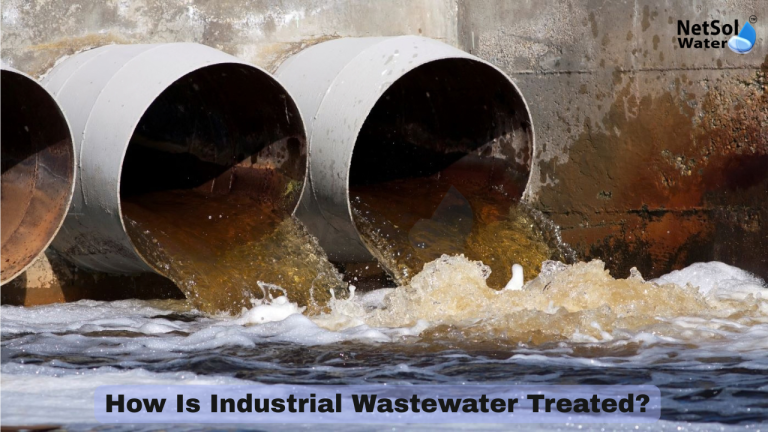
Roughly 4,603 industrial units released their effluent into the municipal sewage network in Tunisia in 2023 alone, according to research published in the Euro-Mediterranean Journal for Environmental Integration, and that single figure from one country hints at the scale of the challenge every nation with a growing industrial base is quietly managing. Treating that volume of wastewater properly isn’t a single process or a single piece of equipment, it’s a carefully sequenced series of stages, each one targeting a different category of pollutant, working together to take contaminated water from a factory floor to something safe enough for discharge or genuine reuse. In this blog we will discuss about how is industrial wastewater treated.
Understanding how this sequence actually works, and why each stage exists, makes it considerably easier to evaluate whether a proposed treatment system genuinely fits your facility’s needs, or whether it’s a generic package that happens to look complete on a proposal document.
What Happens During the Preliminary and Primary Treatment Stages?
Before any biological or chemical treatment can begin, wastewater needs to pass through physical processes designed to remove the coarsest, most damaging material first.
Screening Removes the Obvious First
Bar screens and mesh filters catch large debris, rags, plastics, fibrous material, that would otherwise damage pumps and clog downstream equipment almost immediately. This step sounds basic, but skipping or undersizing it is one of the most common reasons expensive equipment further down the treatment train fails prematurely.
Sedimentation Settles Out Heavier Solids
Primary treatment relies heavily on sedimentation, allowing suspended and settleable solids to sink to the bottom of a tank under gravity, before the partially clarified water moves forward. Large and suspended solids are removed during preliminary and primary treatment through processes like bar screening and sedimentation, which together typically reduce a meaningful share of the incoming pollutant load before any chemistry or biology gets involved.
Why This Early Stage Sets the Tone for Everything After
A poorly designed primary stage doesn’t just fail to remove solids, it overloads every downstream process with material that biological and chemical treatment were never meant to handle directly, which is exactly why facilities skimping on primary treatment tend to see chronic performance problems throughout their entire plant.
How Does Secondary Treatment Actually Break Down Organic Pollution?
Secondary treatment is where the biological heavy lifting happens, targeting the organic load measured through BOD and COD that primary treatment can’t touch on its own.
Activated Sludge Remains the Workhorse
Secondary treatment employs biological processes such as the activated sludge process and the moving-bed biofilm reactor, where bacteria consume organic pollutants as their food source, converting dissolved organic matter into carbon dioxide, water, and additional biomass that can then be separated out.
MBBR Offers a More Compact Alternative
Moving-bed biofilm reactor systems use small plastic carrier media inside an aerated tank, giving bacteria a larger surface area to colonise within a smaller footprint than a conventional activated sludge tank would require, making it a popular choice for facilities working with limited space.
Why Biological Treatment Has Real Limits
Biological treatment depends entirely on bacteria actually being able to consume what’s in the wastewater, which is precisely why heavy metals, high salinity, and certain persistent organic compounds can seriously undermine this stage if they aren’t dealt with beforehand, either through pre-treatment or by routing that portion of the effluent through a different treatment path entirely.
Why Do So Many Facilities Need Tertiary and Advanced Treatment Stages?
For a growing number of industries, secondary biological treatment alone simply isn’t enough to meet current discharge standards or genuine reuse-grade water quality.
Chlorination and UV for Final Disinfection
Tertiary treatment includes additional processes such as chlorination and ultraviolet disinfection, targeting pathogens that survive biological treatment and need a dedicated final step to be eliminated before water is considered safe for discharge or reuse applications.
Membrane Bioreactors Combine Two Steps Into One
Membrane bioreactor technology, also part of the tertiary treatment category, combines biological treatment with membrane filtration in a single unit, producing treated water clean enough for direct reuse in many cases without needing a separate downstream polishing stage.
Advanced Oxidation Handles What Biology Can’t
Advanced oxidation processes generate highly reactive hydroxyl radicals capable of oxidatively degrading persistent contaminants, phenols, synthetic dyes, and pharmaceutical residues among them, that resist conventional biological treatment entirely, often achieving near-complete mineralisation of compounds that would otherwise pass straight through a standard plant untouched.
Where Does Electrocoagulation Fit Into a Modern Treatment Train?
Electrochemical techniques have gained real traction recently as an efficient, lower-footprint option for removing pollutants that conventional treatment struggles with.
How Electrocoagulation Actually Works
In electrocoagulation, an electric current dissolves a sacrificial anode, releasing metal ions that help clump together and remove a wide range of contaminants from wastewater, including oils, heavy metals, and suspended solids, all within a single compact process.
Genuine Advantages Over Chemical Coagulation
- Minimal ongoing chemical usage compared to traditional chemical coagulation
- Relatively simple equipment requirements and straightforward operation
- Small sludge production compared to conventional chemical dosing methods
- Effective across diverse industries, including notably difficult oily wastewater streams
The Practical Limitations Worth Knowing
Electrocoagulation efficiency depends heavily on careful optimisation of current density, electrode material, pH, and electrode spacing, and the technology does face challenges around electrode passivation and energy consumption that need active management rather than a set-and-forget installation approach.
How Do Heavy Metals Actually Get Removed From Industrial Effluent?
Heavy metal removal needs a genuinely different toolkit than what handles organic pollutants, since these contaminants can’t be broken down biologically at all.
Chemical Precipitation Remains the Standard Approach
Adjusting pH and dosing specific chemicals causes dissolved heavy metals to precipitate out of solution as solid particles, which can then be settled and removed through conventional clarification, a well-established and cost-effective method for many common metals.
Ion Exchange and Membrane Recovery for Higher-Value Streams
Where metal recovery has genuine economic value, chromium and nickel from electroplating being common examples, ion exchange resins or membrane-based systems can concentrate the metal into a form worth reclaiming, turning what would otherwise be a pure disposal cost into a partial revenue offset.
Electrooxidation as a Tertiary Polishing Step
Electrooxidation is commonly applied in the tertiary stage of wastewater treatment specifically to remove organic molecules and heavy metals through electrolytic reactions at the electrode surface, typically operating without the additional hazardous chemicals a purely chemical approach would require.
What Does a Complete Industrial Wastewater Treatment Sequence Actually Look Like?
Pulling every stage together into a coherent sequence helps clarify how a real treatment plant is actually structured, rather than treating each process as a standalone option.
- Preliminary screening removes large debris and protects downstream equipment
- Primary sedimentation settles out suspended and settleable solids under gravity
- Equalisation buffers flow and load variability before biological treatment begins
- Secondary biological treatment, ASP or MBBR, breaks down organic pollutants through bacterial action
- Tertiary treatment, filtration, disinfection, or membrane-based polishing, refines water toward discharge or reuse quality
- Advanced oxidation or electrochemical treatment addresses persistent, non-biodegradable compounds where present
- Sludge handling and disposal manages the solid byproduct generated across every stage above
Why Does Treatment Design Need to Be Matched to Your Specific Industry?
A generic treatment sequence rarely performs well against a real industrial effluent stream, since the balance between these stages needs adjusting based on what’s actually in the water.
Heavy Metal Industries Need Front-Loaded Treatment
Electroplating and metal finishing facilities generally need robust metal removal, precipitation, ion exchange, or electrocoagulation, positioned early in the sequence, since sending metal-laden water straight into a biological process risks poisoning the very bacteria meant to handle organic pollutants.
High-COD, Low-BOD Industries Need Advanced Oxidation
Pharmaceutical and petrochemical facilities, given their typically wide COD-BOD gap, usually need advanced oxidation or membrane-based tertiary treatment built in from the design stage, rather than discovering after commissioning that biological treatment alone can’t close the gap to compliance.
High-BOD Industries Can Often Rely More on Biology
Food and beverage processing facilities, dealing with highly biodegradable organic load, can generally achieve strong results through well-sized biological treatment alone, provided the system is scaled correctly against actual production volume and seasonal variation in output.
Who We Are and Why Choose Commercial RO Plant
Designing an effective industrial wastewater treatment system means matching every stage in that sequence, screening, sedimentation, biological treatment, tertiary polishing, and any advanced or electrochemical steps needed, to your facility’s actual pollutant profile rather than a generic package. This is exactly the process Commercial RO Plant’s engineering team works through with every client, starting with genuine effluent characterisation before recommending a single piece of equipment.
We size each treatment stage against your real production volume and actual pollutant load, not a rough industry average, and we’re upfront about where a straightforward biological system will genuinely suffice versus where advanced oxidation, electrocoagulation, or dedicated heavy metal recovery is actually necessary to meet current discharge norms. Beyond design and installation, we support facilities with Consent to Establish and Consent to Operate documentation, online monitoring integration where required, and ongoing AMC coverage that includes real preventive maintenance rather than a reactive callout once something’s already failed. Our goal isn’t to sell the most elaborate treatment system possible, it’s to build the one that actually matches what your process produces and keeps your facility comfortably compliant as norms continue tightening.
Conclusion
Industrial wastewater treatment is a genuinely layered process, moving from physical screening and sedimentation through biological breakdown, into tertiary polishing, and, where needed, advanced oxidation or electrochemical treatment for the pollutants biology simply can’t touch. No single stage does the whole job, and no single technology fits every industry equally well, which is exactly why the treatment sequence needs to be built around your facility’s actual effluent characteristics rather than a standard template borrowed from a different sector entirely.
If you’re planning a new effluent treatment plant or want an existing system reviewed against what your process is genuinely generating, Commercial RO Plant’s team can walk through your specific treatment needs, stage by stage, before recommending a design.
FAQs
Question: What are the main stages of industrial wastewater treatment?
Answer: Most industrial treatment sequences move through preliminary screening, primary sedimentation, secondary biological treatment such as activated sludge or MBBR, and tertiary treatment including filtration and disinfection. Facilities dealing with persistent or non-biodegradable pollutants often add advanced oxidation or electrochemical treatment as an additional stage to handle what biology alone can’t break down.
Question: Why can’t biological treatment handle all types of industrial wastewater?
Answer: Biological treatment depends on bacteria actually consuming the pollutants present, which works well for readily biodegradable organic matter but fails against heavy metals, high salinity, and many persistent organic compounds like synthetic dyes and pharmaceutical residues. These contaminants either resist bacterial breakdown entirely or actively harm the microorganisms doing the treatment work.
Question: What is electrocoagulation and why is it gaining popularity in wastewater treatment?
Answer: Electrocoagulation uses an electric current to dissolve a sacrificial anode, releasing metal ions that clump together and remove a wide range of contaminants, including oils, heavy metals, and suspended solids. It’s gaining traction because it requires minimal chemical dosing, produces less sludge than conventional chemical coagulation, and works effectively across a genuinely diverse range of industrial wastewater types.
Question: How are heavy metals removed from industrial wastewater?
Answer: Heavy metals are typically removed through chemical precipitation, where pH adjustment and specific dosing cause metals to form solid particles that can be settled out, or through ion exchange and membrane-based systems where metal recovery has real economic value. Electrooxidation is also increasingly used as a tertiary stage to remove residual metals and organic molecules together.
Question: What makes pharmaceutical and petrochemical wastewater harder to treat than food industry wastewater?
Answer: Pharmaceutical and petrochemical effluent typically shows high COD alongside relatively low BOD, meaning much of the pollutant load is non-biodegradable and won’t respond to standard biological treatment. Food industry wastewater, by contrast, is generally high in readily biodegradable organic matter, making it a better fit for biological treatment alone without needing advanced oxidation or electrochemical intervention.
Question: Does every industrial facility need advanced oxidation or electrochemical treatment?
Answer: No. Facilities generating primarily biodegradable organic waste, like food and beverage processing, can often achieve full compliance through well-sized biological treatment alone. Advanced oxidation and electrochemical treatment become necessary specifically when a facility’s effluent carries persistent, non-biodegradable compounds, heavy metals, or contaminants of emerging concern that biological processes can’t adequately remove on their own.