
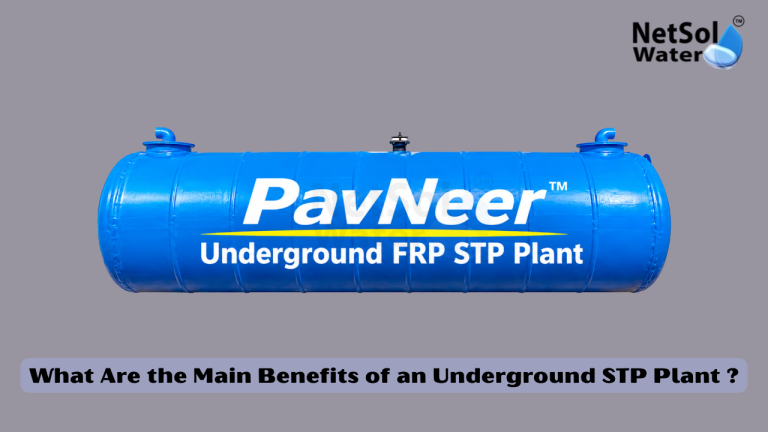
Key advantages of an underground STP include increased availability of space on the surface, reduced environmental pollution by noise and visual impact, enhanced security of machinery from weather and human intervention, and ease of coordination with building design. The costs involved in the construction of an underground STP plant are increased cost of civil works, more challenging design of ventilation and access systems, and increased vulnerability to water ingress. In the context of a small urban site, or in projects for residences, hotels, and educational campuses, the benefits exceed the costs.
Does an Underground STP Really Free Up Usable Land?
Yes, and it is this advantage which is usually the deciding factor. If a plant is located under a garden, a parking area, or a driveway, the surface will be left clear and ready for use as required by the building. On a small piece of land, this may be the difference between whether the plant fits or not at all.
For example, take a frontage of 300 square metres on which an above ground plant would take up about 40 square metres, which is roughly 13% of the space. An underground plant located under the parking area would leave the entire frontage clear for parking and landscaping purposes.
How Does Underground Construction Reduce Noise and Visual Impact?
Tanks, blowers, and control panels are hidden from view, which matters in residential developments, hotels, and campuses where the surroundings form part of the reputation or the sales pitch. Blowers mounted below ground, in an enclosure, usually produce less perceived noise at the boundary than the same equipment at ground level. Acoustic design should still be checked, particularly where homes sit close to the plant.
Does Burying the Plant Protect It From Weather and Tampering?
The underground tanks are not exposed to the sun’s rays, resulting in lower algae growth in open tanks and more consistent temperatures throughout the year. The equipment is protected from rainfall, dust, and any other form of disturbance to some extent. This is dependent on the fact that the access hatches must be secure and that the plant room must be built to keep water away from the equipment.
Can an Underground Plant Fit Better Into the Building Design?
In case the plant is situated below a basement or podium, then the loads can be supported by the building structure itself and the civil work above ground will become less complex. Moreover, in such cases, the plant will be closer to the sewage connection and the reuse points, hence reducing piping and associated risks.
Why Does Plant Position Matter for Treated Water Reuse?
An underground plant that is located centrally, in the landscape area, or near residential blocks can be used to distribute the treated water for irrigation and flushing purposes over smaller distances. Shorter distribution runs reduce the time water spends standing in pipes, which helps keep reuse water in good condition. The reuse system still needs separate piping, storage, and clear labelling, whatever the plant position.
Can FRP Tanks Shorten the Construction Programme?
The prefabricated FRP tanks come with pre-assembly, which means that much of the structure is built at the factory rather than being cast in situ. This could cut the duration of excavation, shuttering, curing, and the time that the site remains operational. In an urban site, the reduction in the time taken for construction activities could have less impact on the neighbourhood and on the occupants of the building itself.
The savings would depend on the size of the tank and the transport route. A large tank would require cranes and a good road route for delivery, and a narrow road may not accommodate the tank. Ensure that the route is feasible before opting for FRP.
What Is the Buoyancy Trade-Off With FRP?
This is the balance that requires the most attention. An FRP tank buried below the ground could float if it was empty or only partially filled. An anchor, concrete foundation, or design that keeps the tank in place would be necessary, which involves additional costs and installation work. The buoyancy of the tank should be considered relative to the highest expected groundwater level, not the current groundwater level.
What Are the Real Trade-Offs of Going Underground?
Civil Construction Costs More
All of these increase costs. The magnitude of the difference compared to an above-ground plant will depend upon the depth of excavation, soil, and the water table level. The only accurate means of assessing this would be by obtaining separate quotes for the civil and mechanical works and comparing the two.
Ventilation Has to Be Engineered
Below-ground storage tanks have the potential of retaining hydrogen sulphide and other gases. Ventilation should be designed either through fans or by planning a ventilation route. This vent should be kept far from any occupied space. Lack of good ventilation is the leading cause of below-ground plant problems, and hence requires a proper design.
Groundwater and Flood Exposure Increase
Higher water table levels will increase waterproofing costs and may even require dewatering during construction. Flood-prone areas will require access covers above ground level, sealed penetrations, and a drain around the structure.
Access Needs Advance Planning
Blowers, pumps, and the sludge route must be reachable for service. Lifting a blower out of a deep chamber takes more planning than lifting it from an open room, and the lifting arrangement should be agreed before the structure is built.
Inspection Is Less Direct
Tanks can only be inspected through openings. Schedule regular inspections and keep the covers accessible, or the tanks will be checked less often than they should be.
When Do the Benefits Outweigh the Trade-Offs?
Underground construction usually makes sense when several of the following apply:
A) The plot is small or almost fully built over.
B) The surface area has high value for parking, landscape, or amenities.
C) The project is residential, hospitality, or institutional, where appearance and noise matter.
D) The groundwater is manageable and ventilation and access can be designed well.
It usually makes less sense when land is cheap and open, the groundwater is high, or access is restricted.
How Should You Test Whether Underground Is Worth It for Your Site?
1) Establish the full civil and mechanical cost for an underground option and an above-ground option on the same flow basis.
2) Measure the groundwater level and check the flood history of the site.
3) Put a value on the surface area the underground option frees up, in terms of parking, landscape, or saleable use.
4) Compare the total cost over the life of the plant, including maintenance and access.
5) Decide whether the freed space and the reduced noise justify the extra civil cost and the ventilation demands.
Conclusion
An underground STP offers real advantages on constrained or valuable sites: freed surface area, lower visual and noise impact, and better equipment protection. Those advantages come with higher civil costs and a greater need for good ventilation, waterproofing, and access. Weigh them against the site, insist on a design that handles ventilation and maintenance from the start, and compare the whole-life cost before deciding.
Commercial RO Plant can carry out an underground Sewage Treatment Plant site assessment covering groundwater, flood level, ventilation, and access, so you can compare the options on the actual location. Request an underground STP site assessment or message us on WhatsApp at +91 9650608473.
Suggested internal link: the STP service page covering underground and packaged systems.
FAQ
Question: Is an underground STP more expensive to build?
Answer: Usually the civil work costs more, because of excavation, concrete tanks, and waterproofing. The mechanical equipment costs about the same. The overall difference depends on depth, groundwater, and access, so compare full quotes for your site.
Question: Does an underground STP save money over its life?
Answer: It can, particularly where land is valuable and the freed space is put to use. It can also cost more to maintain if access is poor. A whole-life comparison gives a fairer answer than the purchase price alone.
Question: Will an underground plant flood?
Answer: It can, if it sits in a low-lying area without protection. Raised access covers, sealed penetrations, drainage, and a sump with a pump reduce the risk. Check the flood history of the site before deciding.
Question: Does an underground STP need more maintenance?
Answer: It needs a different maintenance arrangement. The routine tasks are the same, but access, ventilation checks, and waterproofing inspection add work. Plan these before construction starts.
Question: Can an underground STP support water reuse?
Answer: Yes. A central position can shorten the pipework to gardens and flushing points. The reuse system still needs its own piping, storage, and labelling.
Question: Are underground STPs permitted everywhere in India?
Answer: Requirements vary by city, state, and building approval. Confirm the position with the local authority and the state pollution board before the design is fixed.