
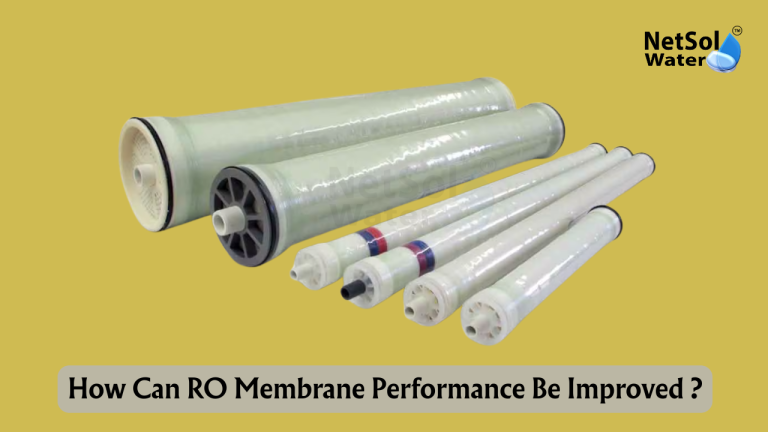
Anyone running an RO system long enough eventually hits the same wall. The plant that used to deliver clean, steady output now feels like it’s working harder for less. Flow drops a little. Pressure creeps up. Water quality that used to be reliable starts drifting. Nothing catastrophic happened, nothing broke overnight, but the numbers just aren’t what they used to be. In this blog we will discuss about how can RO membrane performance be improved.
Membrane performance almost never declines because of one dramatic event. It slips gradually, through a combination of small factors that compound over time, feed water conditions, maintenance habits, operating pressure, and a dozen other details that seem minor individually but add up to a real difference in output over months and years. The good news is that most of these factors are within an operator’s control.
Understanding What Membrane Performance Actually Means
People often think of membrane performance purely in terms of how much water comes out the other side. That’s part of it, but it’s not the whole picture. Real performance covers three things together, flow rate, salt rejection, and consistency over time. A membrane pushing out plenty of water but letting too much TDS through isn’t actually performing well, it’s just failing in a different way than a membrane that’s clogged and barely producing anything. A system that delivers steady, predictable output day after day is more valuable than one that occasionally spikes to impressive numbers but swings wildly the rest of the time.
Start With Proper Pre-Treatment
If there’s one single factor that determines long term membrane performance more than anything else, it’s what happens to the water before it ever reaches the membrane. Feed water carrying excessive sediment, chlorine, iron, or organic matter damages membranes steadily from day one, regardless of how well the RO Plant itself is designed or operated.
A few pre-treatment basics deserve consistent attention:
1) Sediment filtration to remove larger suspended particles before they reach the membrane and clog feed spacers
2) Activated carbon filtration to strip out residual chlorine, since most polyamide membranes are notoriously sensitive to even low level chlorine exposure
3) Water softening or scale inhibitor dosing where hardness is high, preventing calcium and magnesium salts from crystallizing onto the membrane
4) Iron removal where source water carries enough dissolved iron to cause fouling downstream
Why Skipping This Step Costs More Later
Getting these steps right at the front end prevents an entire category of damage that no amount of downstream cleaning can fully reverse once it’s happened. Facilities that treat pre-treatment as optional, or scale it back to save on upfront cost, almost always end up paying more later through shorter membrane life and more frequent, more aggressive cleaning cycles.
The Sediment Filter Nobody Checks Often Enough
Sediment filters are the most overlooked part of pre-treatment simply because they’re cheap and easy to ignore. Left unchecked past their rated capacity, they stop protecting the membrane effectively while still appearing to function normally on the surface, which makes this an easy failure point to miss during routine checks.
Get Operating Pressure Right
Running a membrane at pressure levels outside its recommended range causes problems either way. Too low, and the system struggles to produce adequate output, forcing operators to compensate in ways that stress other components. Too high, and the membrane experiences unnecessary mechanical stress that accelerates wear and can lead to permanent compaction of the membrane material, a change that reduces flow permanently and can’t be undone through cleaning or adjustment. Every membrane comes with a recommended operating pressure range specific to its design and the water conditions it’s rated for, and sticking closely to these specifications protects long term performance even if it means slightly lower output on any given day. Water temperature affects this balance more than many operators realize too, since colder water requires higher pressure to achieve the same flow rate that warmer water would produce more easily.
Optimize the Recovery Rate
Recovery rate, the percentage of feed water that becomes usable permeate versus reject, has a direct relationship with both performance and membrane longevity.
What Happens When Recovery Is Set Too High
Pushing recovery too high concentrates dissolved solids in the reject stream to a point where scaling risk increases significantly. The membrane ends up working against increasingly concentrated water toward the end of the treatment train, which accelerates fouling in that section specifically.
What Happens When Recovery Is Set Too Conservatively
Setting recovery too low wastes water without any real performance benefit, and in commercial or industrial settings where water costs matter, this quietly adds up to real money spent on water that didn’t need to go to waste in the first place.
The ideal recovery rate depends heavily on feed water quality. Water with lower starting TDS can often support higher recovery rates safely, while harder or more mineral heavy water needs a more conservative approach to avoid pushing the system into scaling territory.
Keep a Consistent Cleaning Schedule
Waiting until performance has visibly dropped before cleaning a membrane means the fouling has already had time to become more entrenched and harder to remove. A membrane cleaned proactively, based on a schedule informed by performance data rather than visible symptoms, responds better to cleaning and retains more of its original capacity over its working life. Generic cleaning routines that don’t account for the specific type of fouling present tend to be less effective and sometimes cause unnecessary chemical exposure to the membrane. Keeping records of flow, pressure, and rejection rates over time makes it much easier to spot the gradual decline that signals it’s time to clean, rather than waiting for an obvious, dramatic performance drop.
Address Biofouling Proactively
Biological growth on membrane surfaces is often harder to deal with than mineral scale, since biofilm protects itself with a slimy layer that resists basic rinsing and can regrow quickly if not fully eliminated during cleaning.
Why a Single Treatment Step Rarely Works
Manufacturer approved biocides, applied at the right concentration and combined with proper pre-cleaning to break down the biofilm structure first, address biological fouling more effectively than a single treatment step alone. This usually works best as part of a two stage cleaning process, tackling the organic and biological load together rather than treating them as separate problems.
Reducing the Conditions That Support Growth
Beyond reactive treatment, reducing the nutrients and conditions that support bacterial growth in the first place, through proper pre-treatment and periodic sanitization of the whole system, reduces how often biofouling becomes a problem to begin with.
Monitor and Control Fouling Indicators
The Silt Density Index, commonly abbreviated as SDI, measures how quickly a water sample clogs a test filter, giving a reasonably reliable indication of fouling potential before water even reaches the membrane. Monitoring SDI regularly helps catch pre-treatment issues before they translate into actual membrane fouling. Raw flow and pressure numbers can be misleading on their own, since they naturally shift with temperature and feed water concentration, so normalizing this data to see the true underlying trend gives a much clearer picture of whether a membrane’s actual condition is declining.
Reduce Mechanical Stress on the System
Sudden pressure surges, whether from abrupt valve operation or pump cycling, stress membranes mechanically in ways that accelerate wear over time.
A) Proper valve sequencing avoids abrupt pressure changes during startup and shutdown
B) Pump ramp up controls prevent sudden surges that stress membrane material
C) Flushing membranes with clean, low concentration water before extended shutdowns prevents scaling and biological growth during downtime
D) Avoiding stagnant, concentrated feed water sitting inside the membrane housing for long periods protects membrane condition
Building a proper shutdown procedure into standard operating practice protects membrane condition during periods that might otherwise be overlooked entirely.
Consider Membrane Age and Replacement Timing
Even with excellent pre-treatment and diligent cleaning, membranes don’t last forever. There comes a point where continued cleaning yields diminishing returns, and performance that was recoverable a year or two ago no longer bounces back the way it used to. Recognizing this transition point, rather than continuing to clean a membrane well past its useful life, actually saves money in the long run through better system efficiency and fewer unplanned production interruptions. Facilities that track membrane age and performance trends can plan replacement during scheduled maintenance windows rather than being forced into an emergency replacement when a membrane fails unexpectedly.
Automation and Real Time Monitoring
Where Manual Checks Fall Short
Systems relying purely on manual checks, done once or twice a shift, miss the gradual trends that automated continuous monitoring picks up immediately. A slow pressure creep that might take weeks to become obvious through manual spot checks shows up in automated trend data much sooner, giving operators more time to respond before performance drops significantly.
Building in Automated Alerts
Setting up automated alerts for parameters drifting outside normal ranges, rather than relying on someone noticing during a routine check, catches developing problems earlier and consistently, regardless of shift patterns or how busy the facility team happens to be on any given day.
Training and Operator Understanding
Even the best designed system underperforms in the hands of operators who don’t fully understand what the various readings actually mean or why certain maintenance steps matter. Operators who understand the reasoning behind pre-treatment, cleaning schedules, and pressure management make better real time decisions than those simply following a checklist without deeper context. Investing in proper training, whether through the membrane manufacturer, the system supplier, or dedicated technical resources, pays back steadily through fewer operational mistakes and faster identification of developing issues.
Bringing It All Together
Improving RO membrane performance really comes down to a combination of getting the fundamentals right and staying consistent about maintaining them over time. Proper pre-treatment protects the membrane from unnecessary damage before treatment even begins. Correct pressure and recovery settings keep the system operating within its designed range rather than pushing it toward premature wear. Regular, well timed cleaning keeps fouling from becoming entrenched, and proactive monitoring catches small problems before they become expensive ones.
None of these individual steps are complicated on their own. What actually separates systems that perform well for years from those that decline steadily is consistency, treating membrane care as an ongoing practice rather than something addressed only when performance has already dropped noticeably.
Getting Expert Support for Your RO System
Improving membrane performance isn’t always something a facility can fully diagnose and fix on its own, particularly when the underlying cause isn’t obvious from surface level symptoms. Getting the pre-treatment design right, calibrating pressure and recovery settings to actual feed water conditions, and building a cleaning schedule based on real performance data all benefit from proper technical guidance rather than trial and error. This is exactly the kind of support Commercial RO Plant brings to facilities looking to get more consistent, longer lasting performance out of their RO systems. Rather than treating membrane issues as something to patch reactively, the focus stays on understanding why performance is declining in the first place and addressing the actual root cause.
Membrane replacement is one of the more significant recurring costs in running any RO system, and performance decline that isn’t addressed properly often leads to replacing membranes far more often than should be necessary. A membrane that could reasonably last five to seven years with proper care sometimes gets replaced in half that time simply because underlying issues went unaddressed for too long. If your RO system’s performance has been sliding and routine cleaning isn’t bringing it back the way it used to, getting in touch with Commercial RO Plant for a proper system assessment is a practical way to figure out exactly what’s affecting your membrane’s performance. Visit Our Official Website to start that conversation and get a clearer picture of what your system actually needs.