
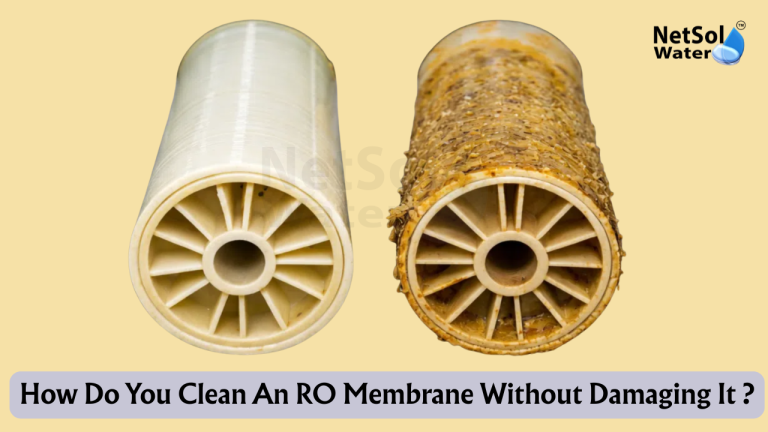
Anyone running an RO system knows the membrane is really where all the action happens. It’s the part doing the actual work, filtering out sediment and impurities from water day after day. But membranes are fragile too, and treating them carelessly can undo years of solid performance in a matter of minutes, which is exactly the kind of detail a good Commercial RO Plant Manufacturer trains operators on from day one. In this blog we will discuss about the how do you clean an ro membrane without damaging it ?
Here’s the real tension at the heart of this whole topic. Cleaning is necessary, skip it and the system slowly loses efficiency without you even noticing at first. But clean it carelessly, with the wrong chemical or too much pressure, and permanent damage happens, sometimes without any obvious sign until performance craters weeks later. So it’s worth walking through this properly, what causes buildup in the first place, how to spot the right moment to clean, the safe way to actually do it, and when cleaning stops being the answer and replacement takes over instead.
Why Does an RO Membrane Need Cleaning
Nothing’s actually wrong with a system just because it’s fouling, it’s simply physics doing what physics does. Water carries dissolved and suspended material, and some of that material inevitably sticks around on the membrane surface.
The Common Causes Behind Buildup
Mineral scaling shows up mostly with hard water, where calcium and other minerals build up on the membrane once they hit their solubility limit. Organic matter, natural organics or oils that slip past pretreatment, leaves a film that gradually chokes off flow. Biofouling happens when bacteria and algae settle in and form a biofilm, honestly one of the more stubborn problems since it protects itself with its own slime layer. Sediment and particulates just accumulate physically over time, especially when pre filters aren’t keeping up the way they should.
Ignore any of this long enough and the problem isn’t just lower output. The membrane starts working overtime, using more energy, and degrading in ways that get harder to reverse the longer it’s left unaddressed.
Signs Your RO Membrane Needs Cleaning
Usually there’s no single dramatic moment where everything fails at once. It’s more of a slow drift that becomes noticeable over days or weeks. Water flow or overall production starts dropping. Pressure on the output side feels weaker than it used to. Water quality slips, with TDS rejection no longer where it should be. Wastewater production increases relative to clean output, and operating pressure creeps up along with the energy bill. None of these signs alone counts as an emergency, but together, they’re basically the system telling you it’s time to act.
Can You Clean an RO Membrane Instead of Replacing It
Most of the time, yes, cleaning is the first move, not replacement. If the decline is gradual and performance responds well to a proper cleaning, continuing to clean and maintain the existing membrane usually makes more sense than swapping it out entirely.
When Replacement Actually Makes More Sense
Replacement starts becoming the better option if cleaning happens constantly and performance keeps sliding back within days or weeks anyway. Visible physical damage on the membrane is another clear signal, as is a membrane old enough that it’s simply not holding up to cleaning the way it used to. Lifespan really depends on feed water quality, how consistently the system gets maintained, and how carefully it’s been cleaned over the years, a membrane that’s been well cared for can outlast a neglected one by a wide margin.
How to Clean an RO Membrane Without Damaging It
1) Turn Off and Depressurize the System First
Before anything else, shut the system down completely and relieve the pressure. Disconnect the water supply, and cut power if any electrical component is involved. This isn’t just a formality, working on a pressurized system is exactly how people get hurt or damage components that didn’t need to be damaged.
2) Inspect the Membrane Before Cleaning
Take a proper look before mixing anything. Check for visible damage, cracks, tears, anything that looks off, and try to get a sense of what kind of fouling is actually present. Scale tends to look chalky or crusty, while biofilm often feels slimy to the touch. Knowing this upfront saves you from grabbing the wrong chemical entirely.
3) Choose the Right Cleaning Solution
This is where a lot of people go wrong, honestly. Acid cleaners handle mineral scale. Alkaline cleaners deal with organic fouling. Sanitizing solutions target biological contamination. And this part matters more than most people realize, avoid bleach or other harsh household chemicals unless the manufacturer has specifically approved it. Most membranes, polyamide ones especially, don’t tolerate chlorine well at all, and it can ruin a membrane in ways that only become obvious once it’s far too late to fix.
4) Prepare the Cleaning Solution Properly
Mix exactly to the concentration the manufacturer recommends, never stronger under the assumption it’ll work faster. Use clean water, ideally RO water itself, for mixing so no new contaminants get introduced into the process.
5) Circulate the Cleaning Solution Carefully
Run the solution through at a controlled, gentle flow rate, since this is cleaning, not a pressure wash. Let it soak if the fouling calls for it, and keep an eye on both pressure and temperature throughout the process, since too much of either stresses the membrane material unnecessarily.
6) Rinse Thoroughly Before Restarting
Flush until no chemical residue remains. This step gets rushed more than any other, and it really shouldn’t be, since leftover cleaning solution can affect water quality the moment the system goes back online. Check the rinse water carefully before putting the system back into service.
7) Restart and Test the System
Bring the system back up and actually check the numbers properly. Look at pressure, measure TDS rejection, and confirm water production is back where it should be. If something’s still off, that usually means the fouling wasn’t fully addressed, or a deeper issue is sitting underneath the surface problem.
Common Mistakes That Can Damage an RO Membrane
Reaching for household cleaning chemicals instead of proper membrane cleaners causes plenty of avoidable damage. Applying too much pressure during circulation is another frequent slip, as is cleaning with hot water when the membrane isn’t rated for it. Mixing chemicals that shouldn’t be combined creates real safety risks, and ignoring what the manufacturer actually recommends tends to backfire eventually. Letting pre filter maintenance slide just makes fouling worse and faster than it needs to be. Any one of these can turn a routine clean into a genuinely costly mistake.
Best Practices to Extend RO Membrane Life
Nothing here is particularly complicated, it’s mostly just consistency over time. Replace sediment and carbon filters on schedule instead of waiting until they’re clearly overdue. Keep an eye on feed water quality so fouling doesn’t come as a surprise. Clean periodically rather than only once performance has already tanked, and stay within the recommended operating pressure range at all times. Doing routine inspections instead of waiting for a problem to announce itself helps a lot, and keeping records, what was cleaned, when, and with what, pays off since patterns become obvious once there’s history to compare against.
How Often Should You Clean an RO Membrane
For residential systems, cleaning once or twice a year is fairly typical, though it depends heavily on water quality at that specific site. Commercial and industrial systems usually need attention more often, sometimes every few months, simply due to higher usage and larger volumes passing through daily.
The real answer depends on how hard the water is, the overall quality of the feed water, how much the system’s actually being used, and what the manufacturer specifies for that particular membrane. Two systems in different locations can end up with very different cleaning schedules even while running the exact same model.
When Should You Replace the RO Membrane
Cleaning has its limits. If TDS rejection keeps declining even after a proper clean, if there’s visible physical damage to the membrane itself, or if fouling keeps returning no matter how well the cleaning’s done, that’s usually the sign replacement is due. Most membranes last somewhere between two to five years depending on water quality and maintenance, though well cared for systems can stretch well beyond that range while neglected ones fall short of it.
Conclusion
Cleaning an RO membrane the right way isn’t difficult, but it does demand real care, identifying the type of fouling correctly, using the right chemical at the right concentration, and sticking closely to what the manufacturer actually recommends. Done properly, this extends membrane life significantly and keeps water quality where it needs to be. When in doubt, slow down and follow the manufacturer’s guidance, it’s the cheapest insurance available against a damaged membrane.
Getting these details right consistently is exactly what separates a reliable Commercial RO Plant Manufacturer from one that just sells equipment and moves on. For anyone looking for commercial RO systems built with this kind of long term thinking, along with proper maintenance guidance to go with it, Commercial RO Plant is worth checking out at official Website.
Frequently Asked Questions
A) Can vinegar clean an RO membrane?
Not really something worth relying on. Regular vinegar is too diluted to make a meaningful difference against real scale or fouling, it’s not a substitute for a proper cleaning solution.
B) Is bleach safe for RO membranes?
No, not unless the manufacturer has explicitly said otherwise. Most RO membranes are chlorine sensitive, and bleach can cause permanent damage even in small amounts.
C) Can I clean an RO membrane at home?
For residential systems, yes, many people handle this themselves as long as they follow the manufacturer’s instructions closely. Larger commercial systems usually call for more specialized handling instead.
D) How long does membrane cleaning take?
It varies, but a typical cleaning cycle, mixing, circulating, soaking, rinsing, often takes somewhere between one and a few hours depending on how severe the fouling actually is.
E) How can I tell if cleaning was successful?
Check the numbers afterward. If flow, pressure, and TDS rejection are back near normal, the clean worked. If they’re still off, the fouling likely wasn’t fully cleared, or a separate issue is at play.