
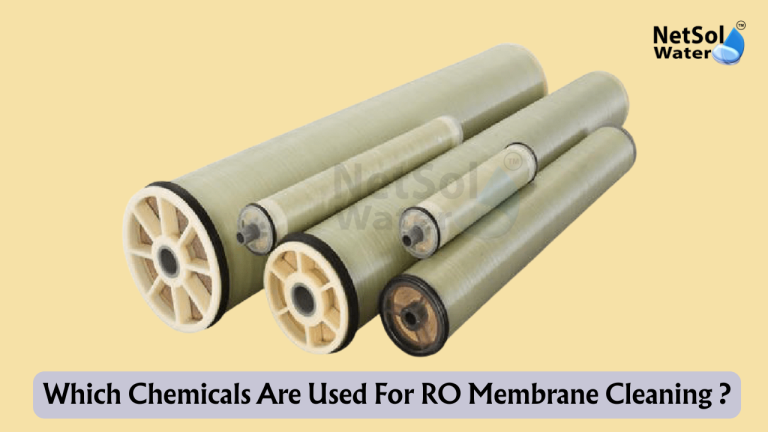
Anyone who’s run an RO system for a while knows this feeling well. Everything’s humming along fine, and then slowly, almost without you noticing, the numbers start drifting. Flow dips a little. Pressure creeps up. You check the readings twice because surely that’s not right. It is right, that’s just what fouling looks like in its early stages, and it’s something every Commercial RO Plant Manufacturer deals with across pretty much every installation they’ve ever built. In this article we read in details about which chemicals are used for RO membrane cleaning ?
Here’s the thing about fouling, it’s not a sign you did something wrong. It’s just what happens when water carrying minerals, organics, and microbes gets pushed through a membrane day after day. Something’s always going to stick eventually. The real question isn’t how to avoid it entirely, it’s what to do once it shows up, and that comes down to picking the right chemical for the right job.
That part isn’t always obvious though. What clears calcium scale won’t touch a biofilm. What handles oily residue won’t do a thing for mineral buildup. So before reaching for any cleaner, it’s worth figuring out exactly what you’re actually dealing with first.
Why Your Membrane Needs Cleaning In The First Place
RO works by forcing water through a membrane under pressure, and everything that membrane blocks has to go somewhere. Most of it flushes out with the reject stream, but not all of it. Some sticks around on the membrane surface, or gets caught in the feed spacers, and over time that buildup starts pushing back against the whole system.
Signs Worth Paying Attention To
Water output isn’t quite what it used to be, even though nothing else in the setup changed. You need more pressure to get the same result you used to get easily. Salt passage creeps up, meaning the membrane just isn’t rejecting the way it should anymore. The whole system starts feeling like it’s working harder for less output. A decent rule of thumb here, once you’re seeing something like a ten to fifteen percent drop from your normal baseline, that’s usually your cue to act. Waiting much longer just makes the eventual cleaning job that much harder.
Figuring Out What’s Actually Fouling The Membrane
This part matters more than people sometimes give it credit for, because guessing wrong wastes chemical, wastes time, and sometimes damages the membrane even further than the fouling already had.
1) Mineral Scale
This happens when dissolved salts, calcium carbonate, calcium sulfate, silica, metal oxides, hit their limit and crash out onto the membrane surface. It usually shows up toward the tail end of the system, right where the water’s most concentrated.
2) Organic Fouling
This comes from natural organic matter or oils that slip past pretreatment somehow. It tends to feel almost slippery, like a thin film, and it’s especially common with surface water sources that carry more organic load to begin with.
3) Biofouling
This is the one that gives people the most grief, honestly. Bacteria and algae settle in and build a biofilm, and that biofilm comes with its own slimy protective layer that just laughs off a basic rinse.
4) Colloidal Fouling
This is fine particulate matter, clay, silt, that gets through when pretreatment isn’t catching everything it should be catching. It usually announces itself with a fast, noticeable pressure climb rather than a gradual one.
Which Chemicals Actually Work For Each Type
A) Acid Cleaners For Scale
These dissolve mineral deposits back into solution so they can be flushed out properly. Citric acid is probably what most people reach for first, since it’s effective without being harsh to handle. Hydrochloric acid does the job too, but it’s stronger and more corrosive, so it gets used more sparingly. Sulfamic acid works as a nice middle ground since it comes as a solid and is easier to handle safely, and phosphoric acid shows up here and there as well. Any of these tend to work well for calcium carbonate scale, iron deposits, and metal oxide buildup.
B) Alkaline Cleaners For Organics
Raising the pH is what actually breaks down organic material, oils, and protein residue sitting on a membrane surface. Sodium hydroxide, or caustic soda, is the classic choice here, alongside sodium carbonate, sodium tripolyphosphate, and various detergent based blends. If the issue leans organic rather than mineral, this is usually where cleaning starts.
C) Chelating Agents For Metal Ions
EDTA and sodium hexametaphosphate work by grabbing hold of metal ions and keeping them suspended in solution instead of letting them redeposit onto the membrane. These come in handy for iron, manganese, and other metal fouling that acid alone doesn’t quite finish clearing.
D) Surfactants And Detergents For Stubborn Residue
Non ionic surfactants and dedicated membrane detergents cut surface tension and help lift oily residue that alkaline cleaning by itself might leave behind on the surface.
E) Enzyme Based Cleaners For Proteins
These actually break proteins down at a molecular level rather than just stripping them off the surface. They show up a lot in food and beverage plants or pharmaceutical water systems, where the fouling is tied directly to whatever’s being processed on site.
F) Biocides, Worth Being Careful With
Peracetic acid and manufacturer approved hydrogen peroxide are the usual picks for knocking down the microorganisms behind biofouling. One thing worth repeating clearly here, stay away from chlorine unless the manufacturer has explicitly signed off on it. Most polyamide membranes, which is what the majority of systems run today, really don’t tolerate chlorine well at all, and even brief exposure can cause permanent damage.
How To Actually Choose The Right Cleaner
Honestly, it comes down to a short list of questions worth asking every time. What’s actually fouling the membrane? What’s the membrane made of? What does the manufacturer’s documentation say? What does the water chemistry look like at this specific site? Under what conditions does the system operate daily?
A lot of operators end up running a two step clean, alkaline first, then acid, simply because real world fouling is rarely just one clean category. It’s usually a mix of several things happening at once, and treating it like a mix gets far better results than picking one chemical and hoping it handles everything.
The Actual Cleaning Process Step By Step
It’s not a complicated process, but it does need to be followed in the right order. First, figure out what’s actually going on, pull performance data, maybe run a water test, and get a real sense of the fouling type before mixing anything at all. Then mix the cleaning solution at whatever concentration and temperature the manufacturer specifies, using clean RO quality water rather than tap water.
Circulate it through the system at low pressure, since this is meant to be cleaning, not blasting the membrane. For tougher cases like biofilm or heavy scale, let the solution soak for a while, since some deposits genuinely need time to react properly. Rinse thoroughly afterward and don’t cut this step short, because leftover chemical residue just creates its own set of problems down the line. Then bring the system back online and actually watch the numbers closely to confirm the clean did what it was supposed to do.
Safety Basics Worth Never Skipping
These chemicals do their job because they’re reactive, and that reactivity cuts both ways. Gloves, eye protection, sometimes respiratory gear, whatever’s appropriate for the specific chemical in use, should always be worn. Stick to the dilution the manufacturer recommends, since going stronger doesn’t mean cleaner, it just means more risk to the membrane itself. Never mix incompatible chemicals together, acids and alkalis combined, or anything chlorine based mixed with another cleaner, can create dangerous fumes fast. Dispose of spent solution properly afterward, and keep a close eye on pH and temperature throughout the entire process.
Habits That Genuinely Help Over Time
Cleaning before things get severe matters a lot, since waiting turns an easy job into a genuinely hard one. Keeping pressure low while circulating helps too, along with staying within the recommended temperature window the whole time. Keeping a record of what was used and when tends to pay off, since patterns become obvious pretty quickly once there’s a history to look back on. Testing performance regularly instead of relying on gut feel rounds out the list of habits that actually make a difference long term.
Mistakes That Come Up More Often Than You’d Think
Grabbing the wrong chemical for the fouling that’s actually present is probably the most common one. Cranking up concentration hoping it’ll work faster usually just causes damage instead of speeding anything up. Not checking pH properly before starting is another frequent slip. Using chlorine on a membrane that can’t handle it causes damage that’s often irreversible. Rushing or skipping the rinse step creates lingering problems, and tossing the manufacturer’s guidance aside in favor of some generic routine that worked somewhere else entirely rarely ends well.
Conclusion
Cleaning an RO membrane really comes down to one thing, matching the chemical to the actual problem instead of grabbing whatever’s closest on the shelf. Acids for scale, alkalis for organics, chelating agents for metals, surfactants for stubborn oily residue, enzymes for biological material, biocides for biofilm. Figure out the fouling type first, follow what the manufacturer actually recommends, and stay consistent with the cleaning schedule. Do that, and the membrane holds up a lot longer than it otherwise would.
Getting this right consistently is exactly the kind of detail a good Commercial RO Plant Manufacturer builds into a system from day one, not just through the equipment itself but through proper guidance on maintaining it for years to come. For anyone setting up or maintaining a commercial RO system and looking for support that goes beyond just the installation, Commercial RO Plant is worth checking out our official website for systems and guidance built around real long term performance, not just a plant that works on day one.
Frequently Asked Questions
1) Can citric acid clean RO membranes?
Yes, and it’s honestly one of the most widely used options, especially for calcium carbonate scale and iron deposits.
2) Is sodium hydroxide safe for every membrane?
Not automatically. pH tolerance varies quite a bit depending on the membrane material, so it’s always worth checking the manufacturer’s specs before assuming it’s safe to use.
3) What about just using vinegar instead?
Not really a good substitute. Regular household vinegar is far too dilute and isn’t built for this kind of job, it won’t meaningfully touch real scale or fouling on a membrane.
4) How often should membrane cleaning be done?
This depends heavily on feed water and setup, but plenty of systems land somewhere between every few months and twice a year. Letting performance data guide the timing beats sticking to a fixed calendar regardless of actual conditions.
5) What handles biofouling specifically?
Manufacturer approved biocides like peracetic acid or hydrogen peroxide, often paired with an alkaline step first to help break the biofilm apart before the biocide finishes the job.
6) Can acid and alkaline cleaning be run together?
Not mixed as one solution, but back to back works well, alkaline first for the organic side, acid after for the mineral side. That sequence handles mixed fouling far better than picking just one approach and hoping it covers everything.